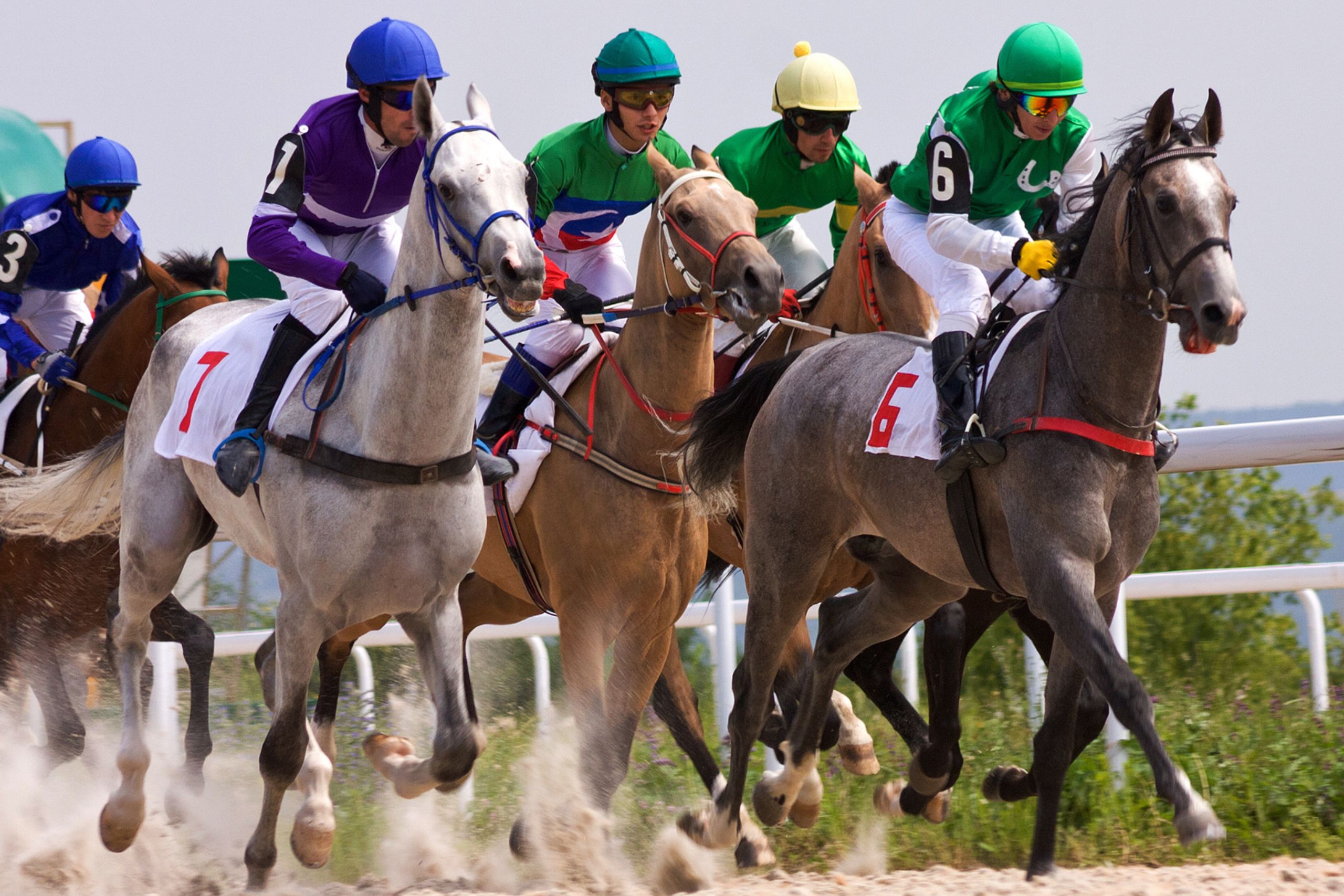
Horse racing is one of the few betting disciplines where genuine knowledge, careful research, and disciplined analysis can meaningfully shift the odds in a bettor’s favor. Unlike pure chance-based games where no amount of study changes the underlying mathematics, horse racing rewards those who do their homework. But the gap between casually picking a horse based on its name or a bright silks color and making a truly informed selection backed by solid reasoning is wider than most newcomers realize. The good news is that the information needed to make smarter, better-grounded selections is largely available to anyone willing to learn how to find it and use it correctly. From reading a form guide and understanding track conditions to evaluating trainer and jockey statistics and identifying genuine value in the betting markets, the tools of the informed horse racing tipster are learnable, practical, and genuinely impactful. This guide brings all of that information together in one place — so the next selection made carries real reasoning behind it rather than guesswork dressed up as confidence.
Understanding Horse Racing Form: The Foundation of Every Good Tip
The form guide is the single most important research tool available to anyone attempting to make an informed horse racing selection — and learning to read it properly is the foundational skill from which every other analytical approach builds. At its core, a form guide records a horse’s recent race history in a structured, condensed format that communicates an enormous amount of information to the trained eye. Race positions, distances, track conditions, weights carried, jockeys, trainers, times recorded, and the class of competition faced are all encoded within a standard form line, and the ability to decode that information accurately is what separates genuinely considered selections from uninformed guesses.
The most recent form is generally the most relevant — a horse’s last three to five race results provide the clearest current picture of its fitness, its level of form, and the conditions under which it performs best. However, recent form needs to be read in context rather than in isolation. A horse that has finished outside the placings in its last two races may have done so on ground conditions that do not suit it, against a significantly higher class of competition than it will face today, or while recovering from a minor setback that has since been resolved. Conversely, a horse that has posted two recent wins may have done so against weaker opposition than it faces in today’s contest, making those wins less predictive than they appear at first glance.
Going back further in the form record to find what racing professionals call a comparable run — a previous performance under similar conditions to today’s race in terms of distance, ground, track profile, and class — is one of the most reliable analytical techniques available. A horse that ran a strong race over the same distance, on the same going, at the same track twelve months ago has demonstrated the specific capability being tested today in a way that more recent runs in different conditions do not. Identifying these comparable runs and weighting them appropriately in the overall assessment of a horse’s chances is a skill that develops with practice and significantly improves selection quality over time.
Reading Track Conditions and Going Reports
Ground conditions — the state of the racing surface on the day of the race — are one of the most significant variables affecting horse racing outcomes, and yet they are among the most frequently overlooked factors by casual bettors who focus entirely on recent form without considering whether the conditions under which that form was produced resemble those the horse will face today. Some horses are specialists on firm, fast ground. Others genuinely thrive in soft, testing conditions that others find exhausting and slow. Understanding a horse’s going preference — and confirming that today’s conditions align with it — is one of the most practically useful filters available when narrowing down a field.
Going descriptions in British and Irish racing use a standard scale that runs from hard at the firmest extreme through firm, good to firm, good, good to soft, soft, and heavy at the wettest and most testing end. In flat racing, the fastest and most competitive fields tend to run on good to firm ground, where times are quick and horses with natural pace can express themselves freely. In jump racing, soft and heavy ground tests stamina and jumping ability to a degree that changes the competitive hierarchy of a field dramatically compared to how the same horses might finish on better ground. Tracking the official going description issued by the racecourse on the morning of the race — and comparing it to the ground descriptions listed alongside a horse’s best and worst previous performances in its form record — provides a clear, actionable signal about whether conditions today favor or disadvantage each runner.
The track profile itself is another dimension of the going picture that deserves consideration. Some courses are flat and relatively straightforward, suiting horses that run prominently and can sustain their effort throughout. Others feature significant uphill finishes, tight bends, undulating terrain, or long straight run-ins that favor different running styles and physical attributes. Cheltenham’s demanding hill finish, for example, consistently favors strong stayers with relentless galloping ability over horses that produce a sharp, short burst of acceleration. Ascot’s long, straight course on the flat rewards horses with genuine top-end speed that can sustain the effort over a longer-than-average run-in. Understanding the specific demands of the track being raced on and matching those demands to the physical profile of the horse under consideration adds a layer of analytical precision that significantly improves the accuracy of any selection.
Trainer and Jockey Statistics: The Human Element Behind Every Winner
A horse does not arrive at the racecourse in peak condition by accident — it gets there through the skill, knowledge, and strategic planning of its trainer. And once it is on the track, the skill and judgment of its jockey play a significant role in how effectively its physical ability is translated into a competitive performance. Both of these human elements are measurable through publicly available statistics, and incorporating them into a selection analysis significantly improves the quality and accuracy of that analysis.
Trainer strike rates — the percentage of runners from a specific stable that win — provide a baseline measure of overall effectiveness, but the most useful trainer statistics are the more specific ones. A trainer’s record at a specific course, over a specific distance, or under specific going conditions reveals patterns that a simple overall strike rate conceals. Some trainers are renowned for their ability to produce horses at their peak for specific races — particularly major festival races where preparation timing is critically important. Others have exceptional records at particular courses due to familiarity with the track’s demands and a history of targeting specific races there with appropriate horses. A horse trained by a handler with a strong recent record at today’s course, over today’s distance, under today’s conditions is carrying a measurable statistical advantage over one from a stable with a poor record in those same parameters.
Jockey form and course records are equally telling. An in-form jockey with multiple recent winners is riding with a confidence and sharpness that contributes directly to performance — the hands-and-heels rhythm of a jockey in peak form influences how a horse settles, how it responds to steering through a race, and how effectively it is presented at the critical moment when the effort is asked for. Course specialists among jockeys are a real phenomenon — certain riders develop an exceptional understanding of specific track layouts, timing their runs and positioning their mounts with a precision that consistently produces results at venues where their record significantly outperforms their average elsewhere. Booking the right jockey for a specific track is one of the calculations that winning trainers make, and it is one the informed bettor should account for when assessing the human element of any race.
Identifying Value: The Most Important Concept in Horse Racing Betting
Understanding a horse’s chances is only half of what makes a winning tip — the other half is understanding whether the odds available on that horse in the betting market represent genuine value. This concept of value is arguably the single most important principle in all of horse racing betting, and yet it is the one most consistently ignored by casual bettors who focus entirely on picking winners without considering whether the return available on those winners justifies the risk of backing them.
Value exists when the probability of a horse winning — as assessed by the bettor’s own analysis — is higher than the probability implied by the odds on offer. If a horse is priced at four to one, the market is suggesting it has approximately a twenty percent chance of winning. If a bettor’s own research, form reading, and analysis of conditions, trainer form, and jockey statistics suggests the horse has closer to a thirty percent chance of winning, then backing it at four to one represents a value bet — the expected return over a large number of similar situations exceeds the risk. Consistently backing horses at prices that represent genuine value is how professional bettors generate long-term profit regardless of whether any individual selection wins.
Conversely, backing a short-priced favorite that is genuinely likely to win but is priced so tightly that a single losing bet wipes out the returns from several winners is a value-negative approach that produces long-term losses even when individual selections are correct. The market favorite wins approximately thirty percent of flat races in the UK — a fact that makes blindly backing favorites a losing strategy over time despite their higher individual win rate, because the average price available on favorites is insufficient to compensate for the seventy percent of occasions when they do not win. Developing the discipline to pass on selections where the price does not represent value — even when the horse appears likely to run well — is one of the most powerful and most difficult habits a bettor can develop, and it is the defining characteristic of every consistently profitable horse racing tipster.
Using Speed Figures, Ratings, and Professional Tipster Resources
Beyond form reading and going assessment, a range of quantitative analytical tools are available to the serious horse racing bettor that add further precision to the selection process. Speed figures are numerical ratings assigned to each race performance based on the time recorded, adjusted for going conditions, distance, and the specific characteristics of the course. They allow performances recorded on different days, at different courses, and under different conditions to be compared on a standardized basis — answering the question of how fast a horse has actually run relative to comparable horses at the same level, rather than simply how it finished relative to the others in that specific race.
Official ratings — published by the relevant racing authority for each horse — represent a handicapper’s assessment of each horse’s current ability expressed as a numerical value. In handicap races, these ratings are used to assign the weight each horse carries, with higher-rated horses carrying more weight to equalize competitive chances. Identifying horses that appear well-handicapped — those whose official rating does not fully reflect their current ability or whose most relevant recent form suggests they are capable of outrunning their assigned mark — is one of the most consistently productive approaches in horse racing selection. Horses that have recently returned from a break, changed trainers, or are stepping down in class from their most recent runs are among the types most likely to be running off a mark that understates their current capability.
In the world of gambling, horse racing tipster services range from the genuinely insightful to the deeply unreliable, and evaluating them requires the same critical framework applied to any other information source. A reputable tipster maintains a transparent, fully verified record of all selections made over a meaningful time period — not just a curated highlight reel of winners. Strike rate, profit and loss to industry starting price, return on investment, and the number of selections made across different bet types are the metrics that reveal whether a tipster’s output has genuine long-term value or is simply benefiting from a fortunate short-term run that conceals a poor underlying record. Seeking out tipsters whose records are independently verified through established proofing services and whose methodology is explained clearly and consistently is the standard that any serious bettor should apply before acting on external selection advice.
Building a Personal Selection Process That Works Over Time
All of the individual analytical tools discussed in this guide are most powerful when they are integrated into a consistent, repeatable personal selection process rather than applied randomly depending on how much time happens to be available before a race. A structured approach to selection — one that systematically considers form, going suitability, trainer and jockey statistics, class assessment, and market value for every race being considered — produces more consistent results than an ad hoc approach that relies on whichever factors happen to be most salient in the moment.
Building this personal process begins with defining the specific types of races and horses the analysis will focus on. Attempting to cover every race on every card at every meeting is not realistic and not necessary — many of the most successful horse racing bettors operate with a deliberately narrow focus, specializing in a specific race type, distance range, or class level where their accumulated knowledge gives them a genuine informational edge. Flat sprint handicaps, for example, have very different analytical dynamics from long-distance staying hurdles — and a bettor who develops deep expertise in one area will consistently outperform one who spreads their attention thinly across all types.
Keeping a detailed record of every selection made — the horse backed, the race conditions, the analytical reasoning applied, the price taken, and the outcome — creates the kind of feedback loop that drives genuine improvement over time. Reviewing this record periodically to identify which analytical factors most reliably predicted successful outcomes, which types of races produced the best return on investment, and where the most costly errors in reasoning occurred allows the selection process to be refined progressively rather than repeated unchanged regardless of results. Horse racing rewards those who approach it with the intellectual honesty, disciplined record-keeping, and genuine curiosity of a continuous learner — and the bettor who commits to improving their process with the same seriousness they bring to individual selections is the one most likely to achieve consistently rewarding long-term results.
Conclusion
Picking a winning horse racing tip is never a guaranteed science — the sport’s inherent unpredictability is part of what makes it so compelling and so enduring as a betting medium. But the gap between an uninformed guess and a genuinely researched, analytically grounded selection is real, measurable, and financially significant over time. Mastering the form guide, understanding how going conditions affect performance, incorporating trainer and jockey statistics, developing a clear sense of value in the betting market, using speed figures and ratings to add quantitative depth, and building a consistent personal selection process are the overlapping disciplines that together produce the kind of informed, confident horse racing analysis that stands up to scrutiny long after the race is run. No single tip is ever certain — but every tip backed by this depth of preparation is a better bet than one made without it, and that difference, sustained over a full season of racing, is where genuine long-term success in horse racing betting is found and kept.